
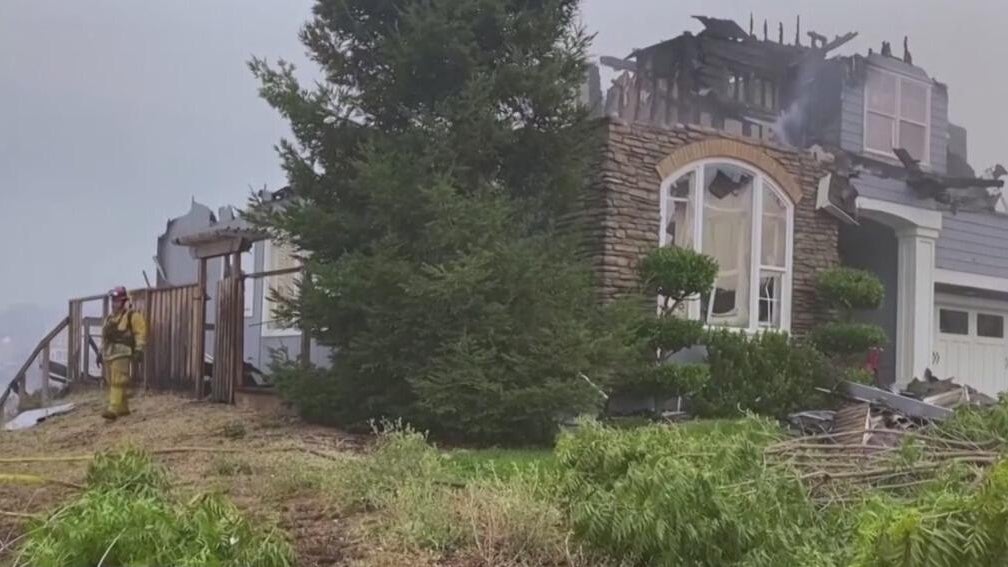
California homeowners are facing another financial blow as insurance rates under the state's FAIR Plan increase by an average of 29.1% starting Thursday.
The California FAIR Plan provides basic fire insurance to property owners who cannot obtain coverage through traditional insurance companies. Although created by the state, the program is operated and funded by private insurers.
As insurance companies pull back from wildfire-prone areas, more homeowners have been forced to rely on the FAIR Plan, often paying significantly higher premiums for more limited coverage.
But some homeowners are discovering that investing in wildfire protection can help them qualify for more affordable insurance.
For years, Napa County homeowner Phil Burton put off creating defensible space around his Pope Valley property. That changed after the devastating Glass Fire swept through Napa County in 2020, destroying parts of nearby Deer Park and threatening his community.
"We watched it for two days burn across the hills over the top down hills and heading our way," Burton said. "It was both fascinating and frightening at the same time."
About four years ago, Burton's insurance carrier dropped his wildfire coverage, forcing him to turn to California's FAIR Plan. His annual premiums more than doubled to approximately $9,000, eventually approaching $10,000.
"It got to $10,000 and I said I can't do that," Burton said. "We're on fixed income. So it does make a difference."
Burton's experience reflects a growing insurance crisis across California, where insurers have pulled back from wildfire-prone communities, leaving many homeowners scrambling to find coverage.
The number of FAIR Plan policies has increased dramatically over the past decade. In 2016, the program had approximately 140,000 policies. By 2020, that number had climbed to more than 200,000. As of June 2026, the FAIR Plan had nearly 700,000 residential and commercial policies, almost five times the number a decade earlier, according to the California Department of Insurance.
Despite the challenges, some insurance companies are reconsidering how they evaluate homes in wildfire-prone areas.
Joe Nordlinger, CEO of Napa Firewise and a volunteer firefighter, said insurers are increasingly examining the steps homeowners take to reduce wildfire risks.
"You see carriers like Mercury and CSAA and others that have said, 'OK, we're going to have our own checklist for what we consider to be a wildfire-prepared home,'" Nordlinger said. "They're rethinking how they might engage or insure."
The nonprofit Napa Firewise helps county residents reduce wildfire risks through vegetation management, defensible space and community-wide preparedness efforts. The organization also works to improve firefighters' access to critical information about rural properties.
"We have worked to map critical resilience elements in large rural properties around the county. We've worked to get that data integrated directly into the systems that the firefighters use when they go to fight a fire," Nordlinger said. "All of that translates into tighter response times, more rapid suppression."
For Burton, the investment in wildfire protection has paid off financially. After documenting his home-hardening improvements and sharing that information with insurance companies, he secured coverage through Mercury Insurance. He now pays less than half of what he previously paid under the FAIR Plan, saving thousands of dollars annually.
"Anger doesn't get you much," Burton said. "It just redoubled my efforts to find an alternative."
Burton's experience offers an example of how wildfire mitigation can potentially help homeowners find more affordable insurance, although savings and coverage options vary depending on the property and insurer.
The FAIR Plan's new rates apply to new and renewing policies beginning Oct. 15. While the statewide average increase is nearly 30%, individual rate changes depend on factors including location and wildfire risk.
For Burton, protecting his home from wildfires is now helping protect his wallet, too.


